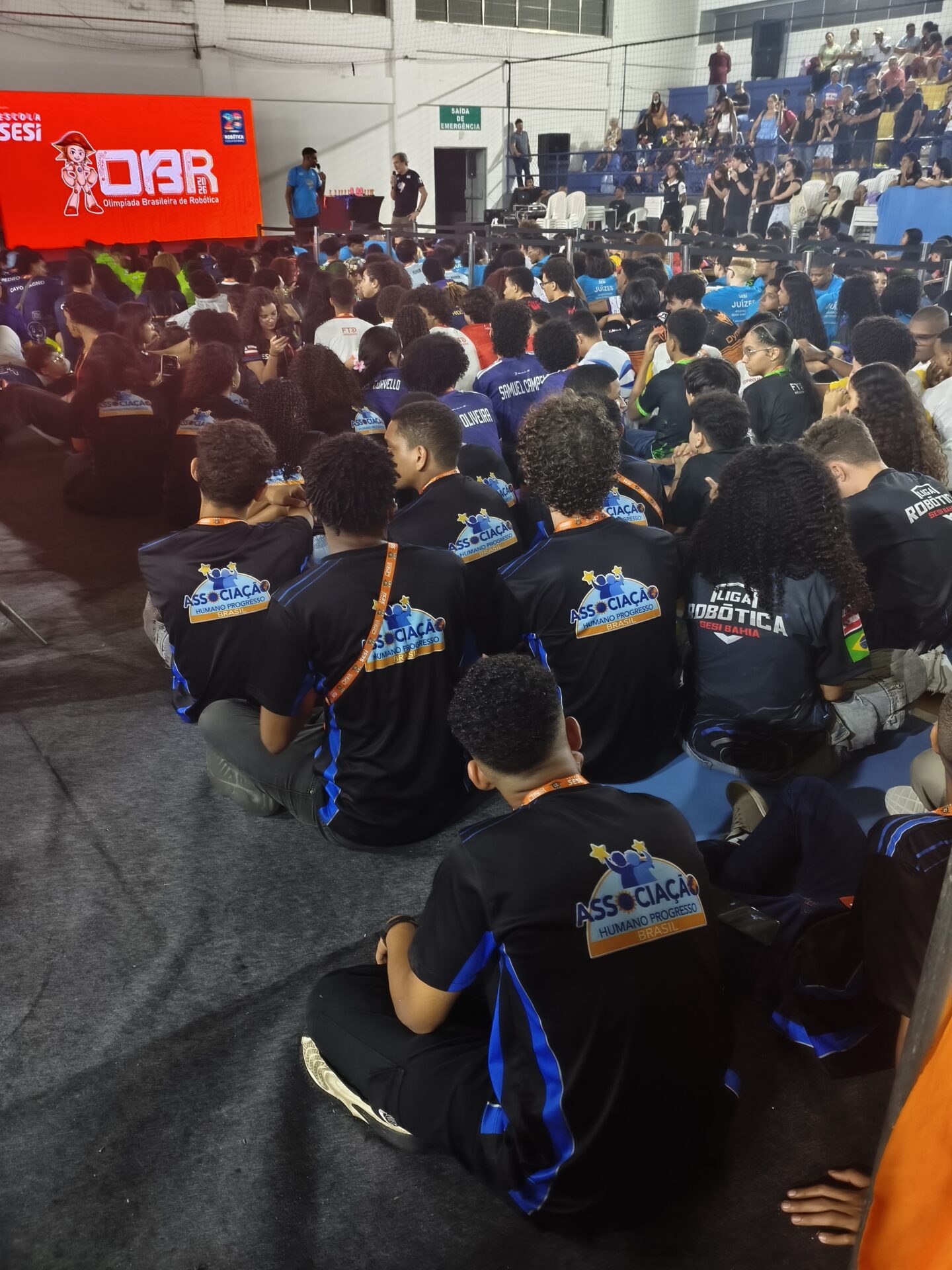
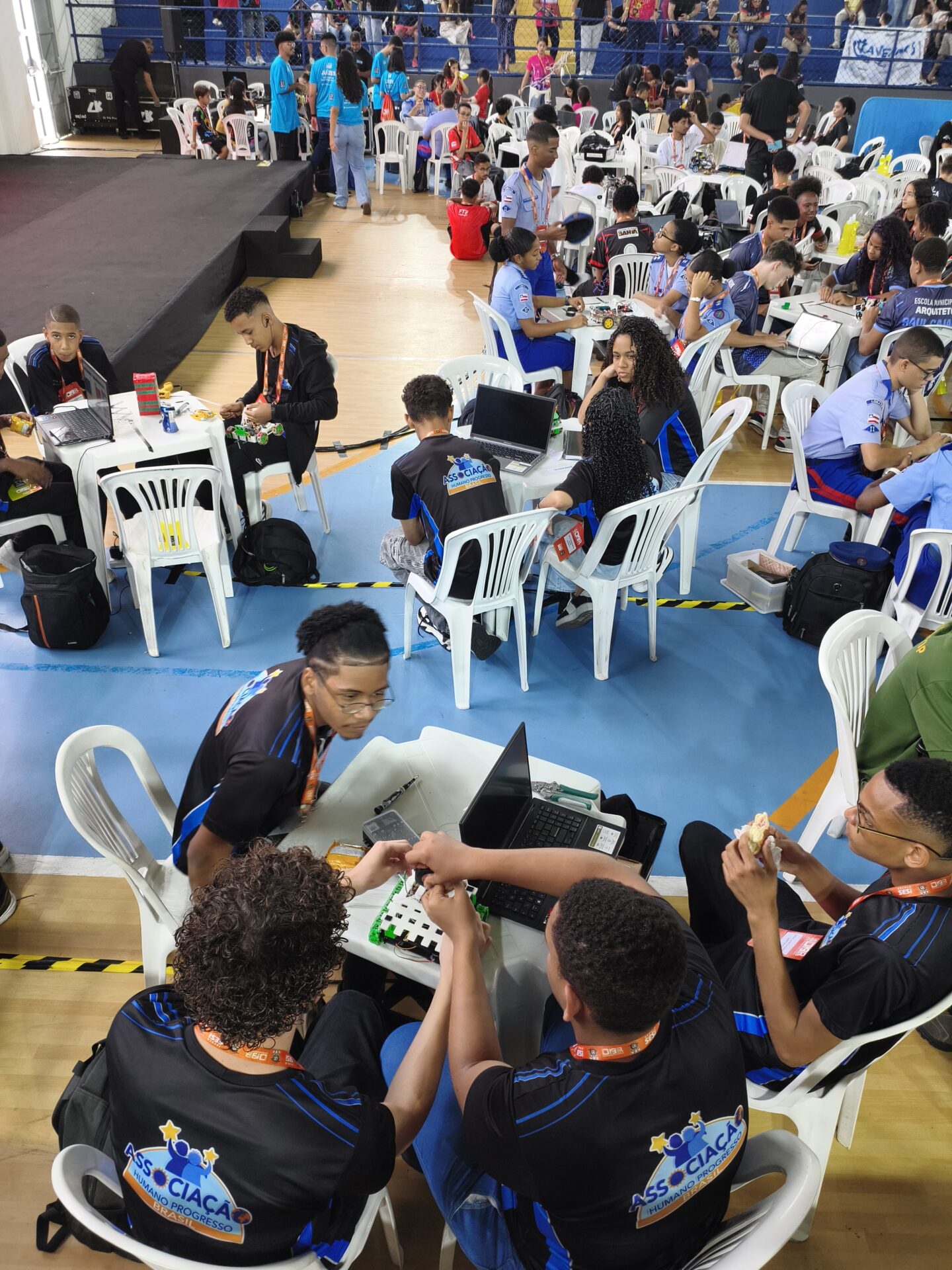
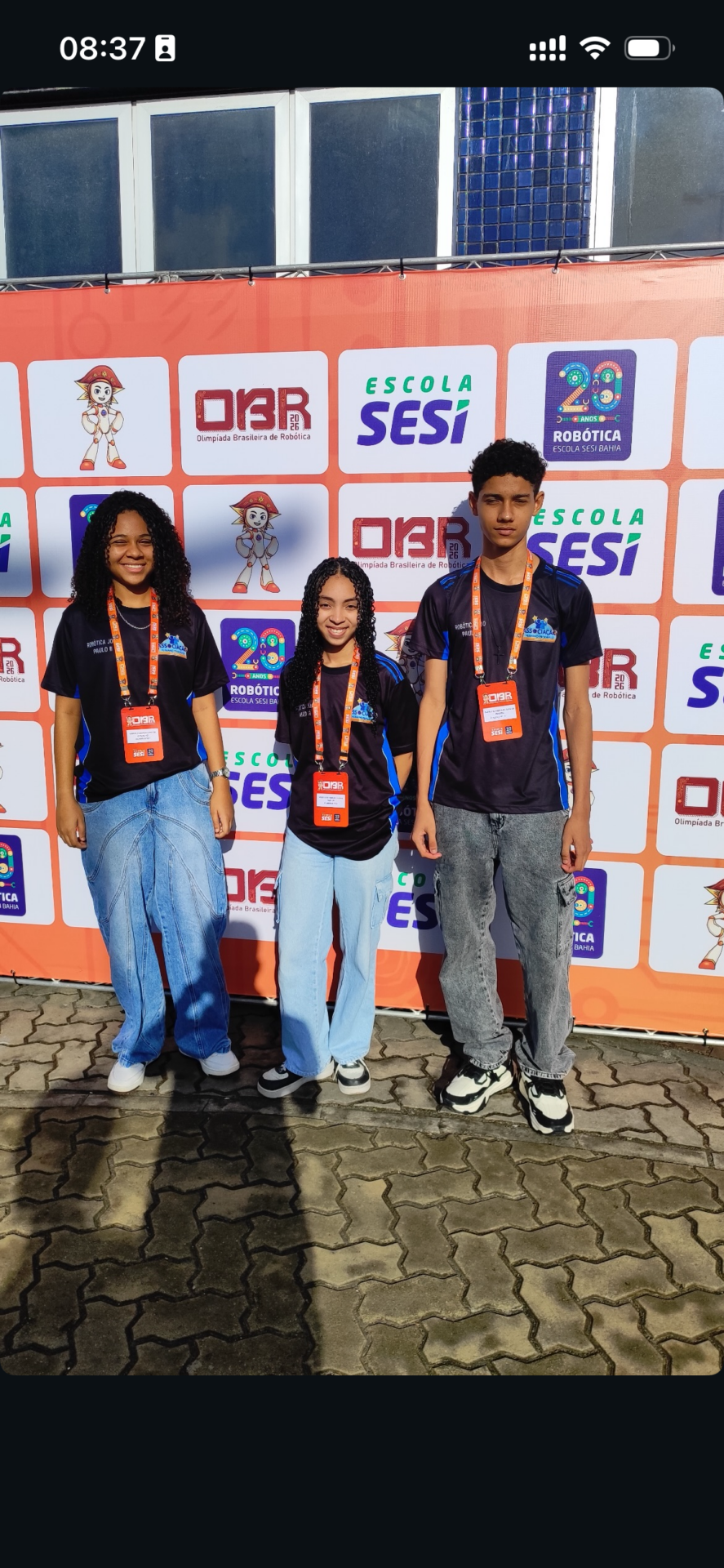
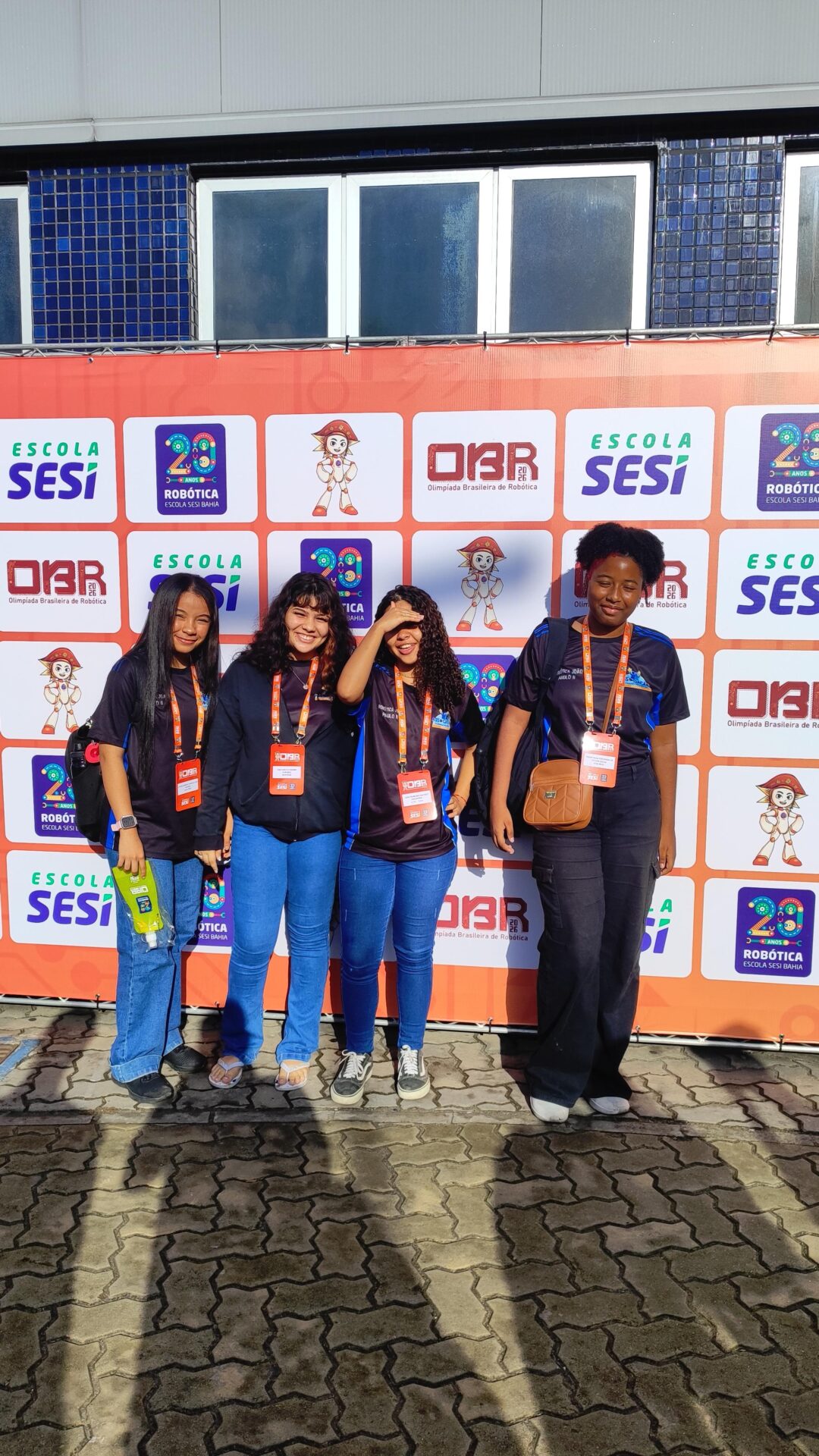
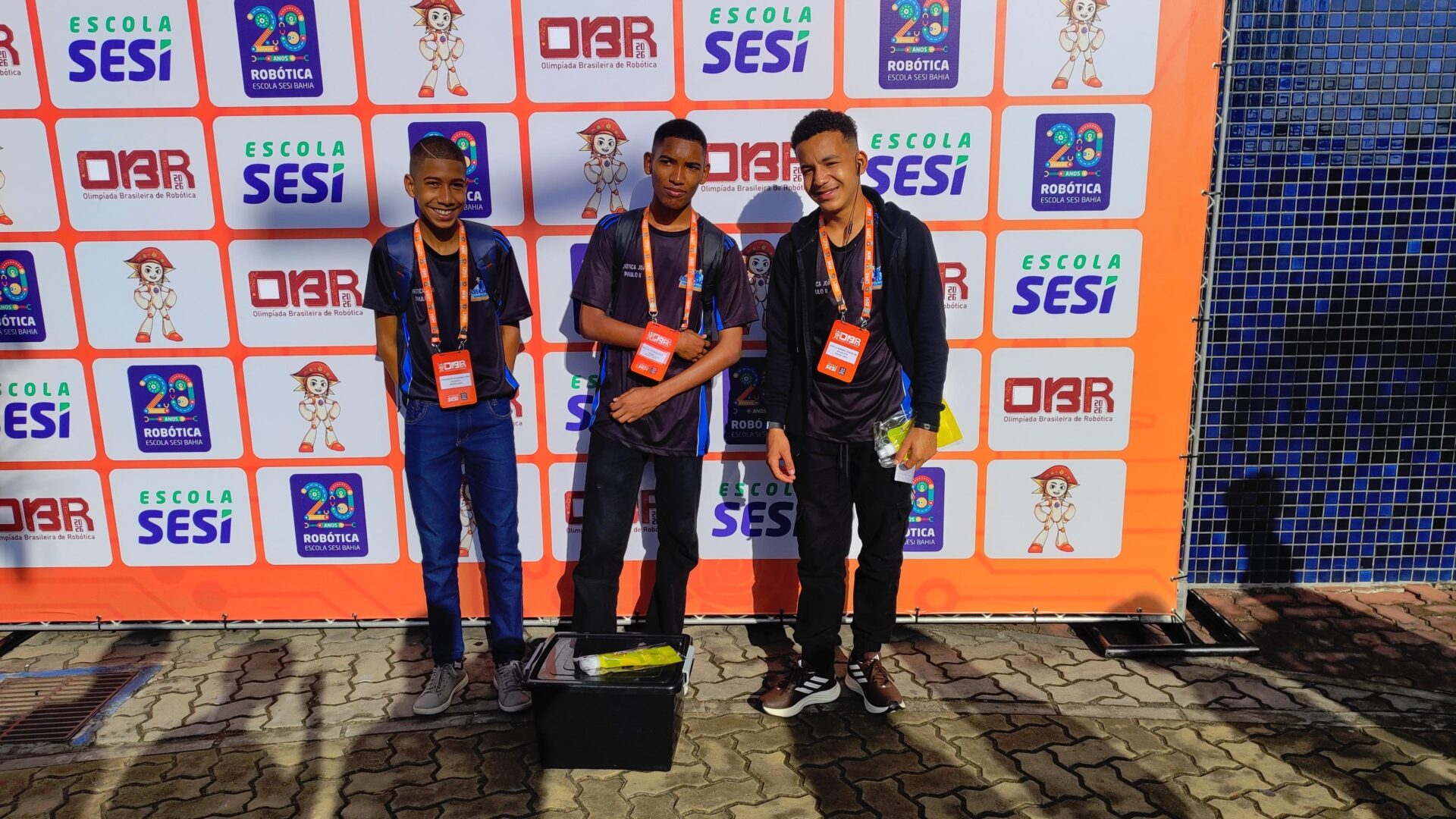
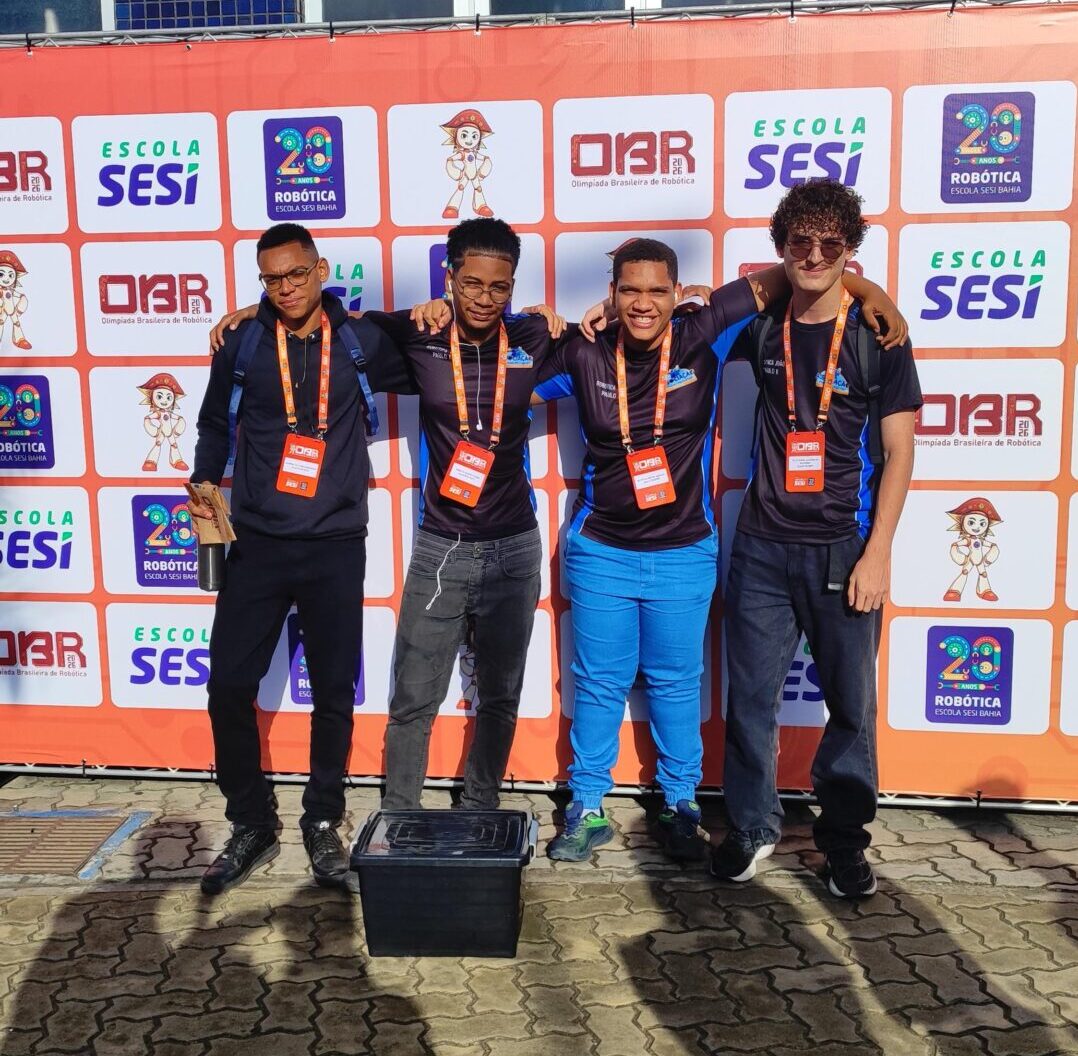
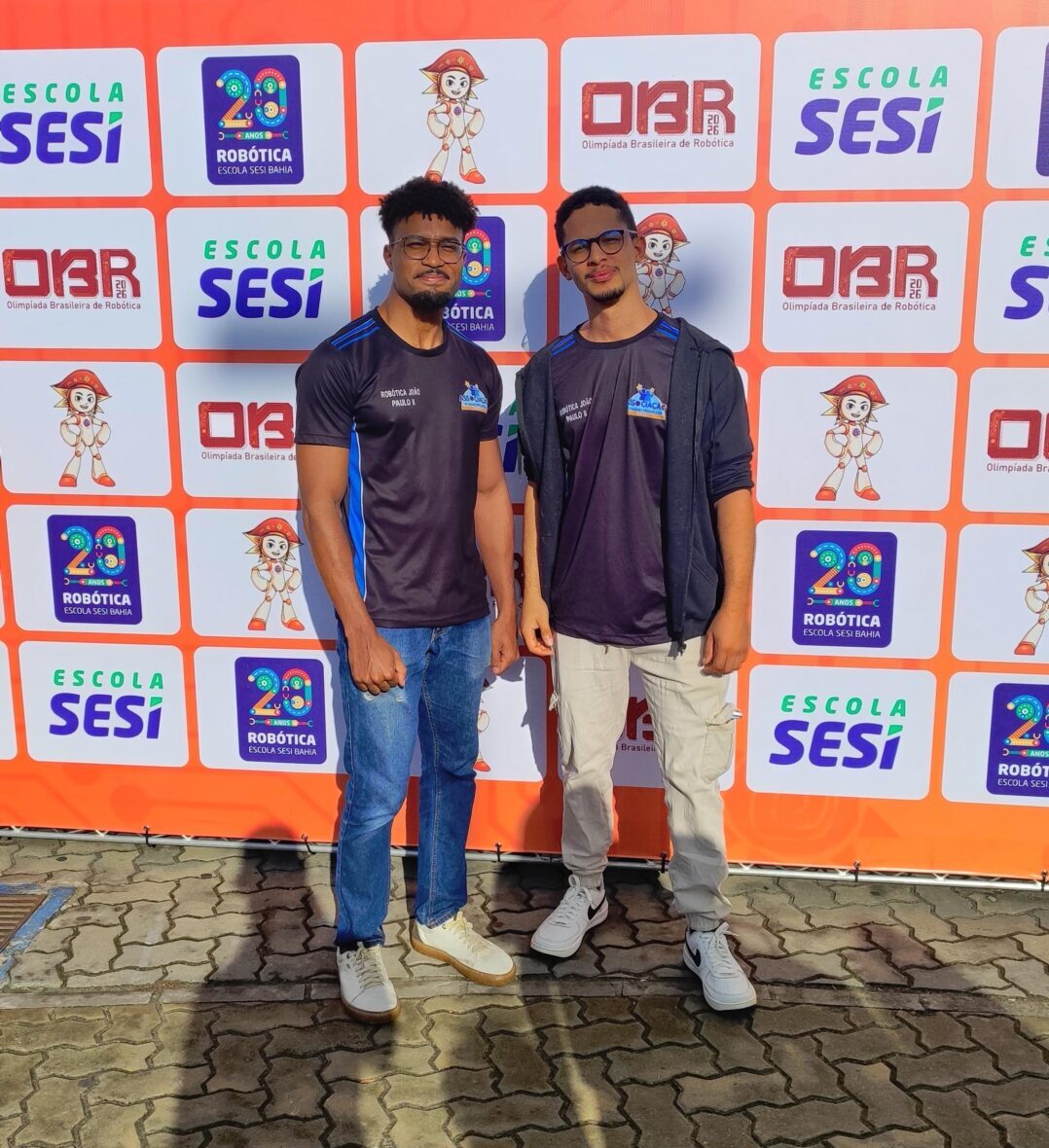
On August 29, students from the Advanced Robotics course at the João Paulo II Educational Center participated in the State Stage of the 2026 Brazilian Robotics Olympiad (OBR), held at the SESI Djalma Pessoa School in Salvador.
The event brought together 115 teams from 24 cities across Bahia, featuring participation from both public and private institutions. Among them, the João Paulo II Educational Center stood out: it was the only social organization present at the event.
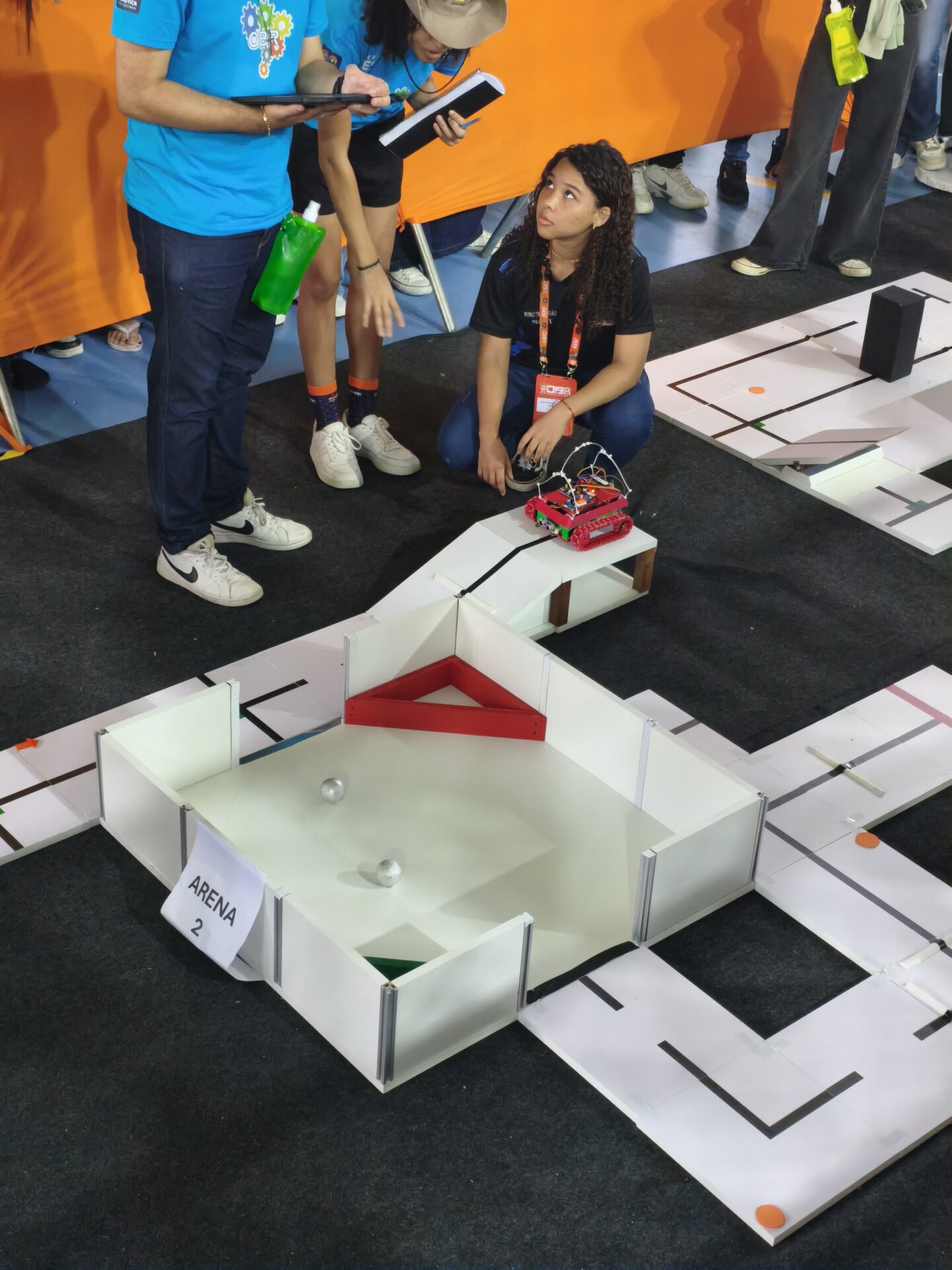
The challenge in the rescue category involved planning, programming, and building an autonomous robot capable of travelling a route with various obstacles, identifying victims, and performing a rescue without human intervention. To achieve this, students had to apply technical knowledge, develop strategies, test solutions, and make adjustments in real time.
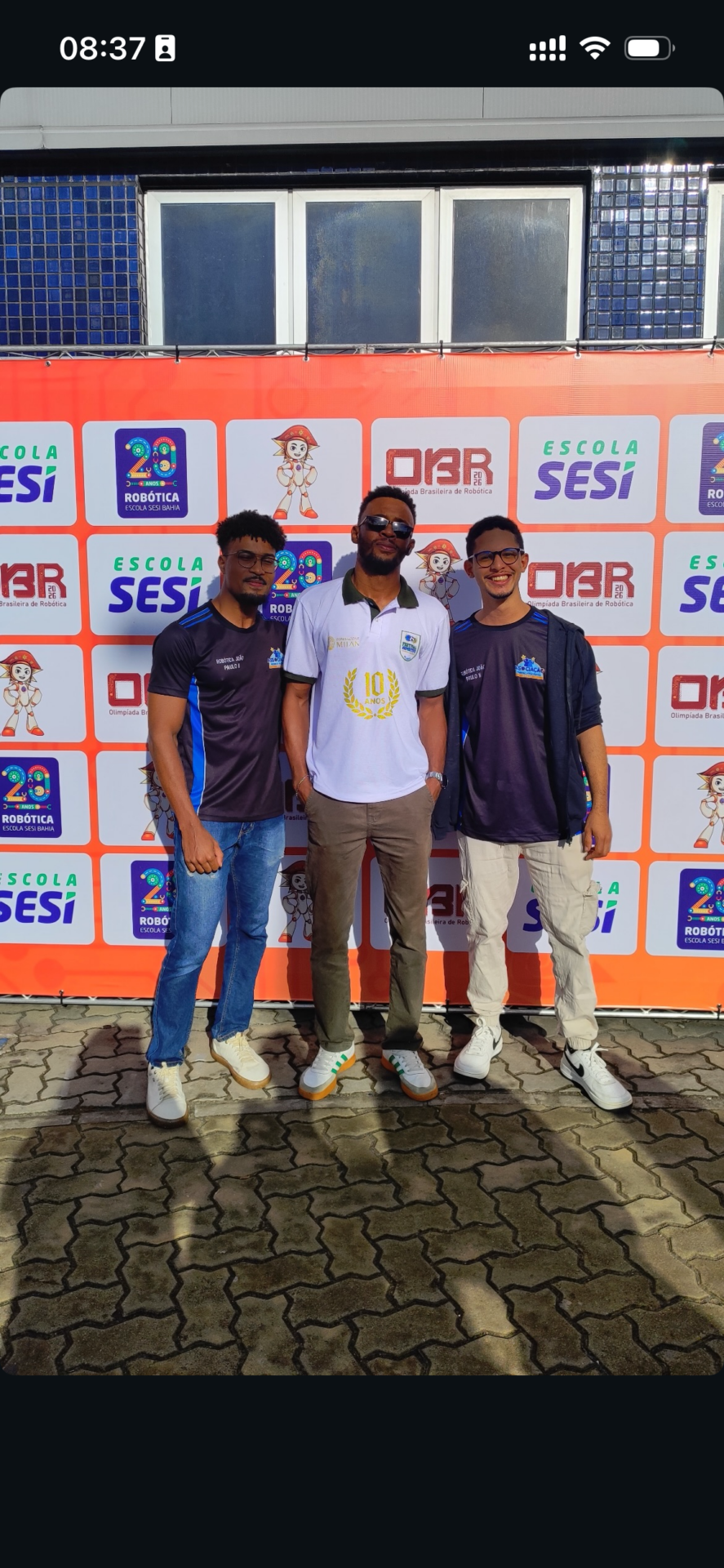
The preparation for the Olympiad also involved deepening their skills in modeling and programming tools. Under the guidance of Allan Borges—who leads the advanced robotics course—and with the support of teachers Ezequiel and Julivam, the students worked on every stage of the creation of the robot, from planning parts in Tinkercad to developing the code needed to execute the assigned tasks. Challenges that turn into learning opportunities.
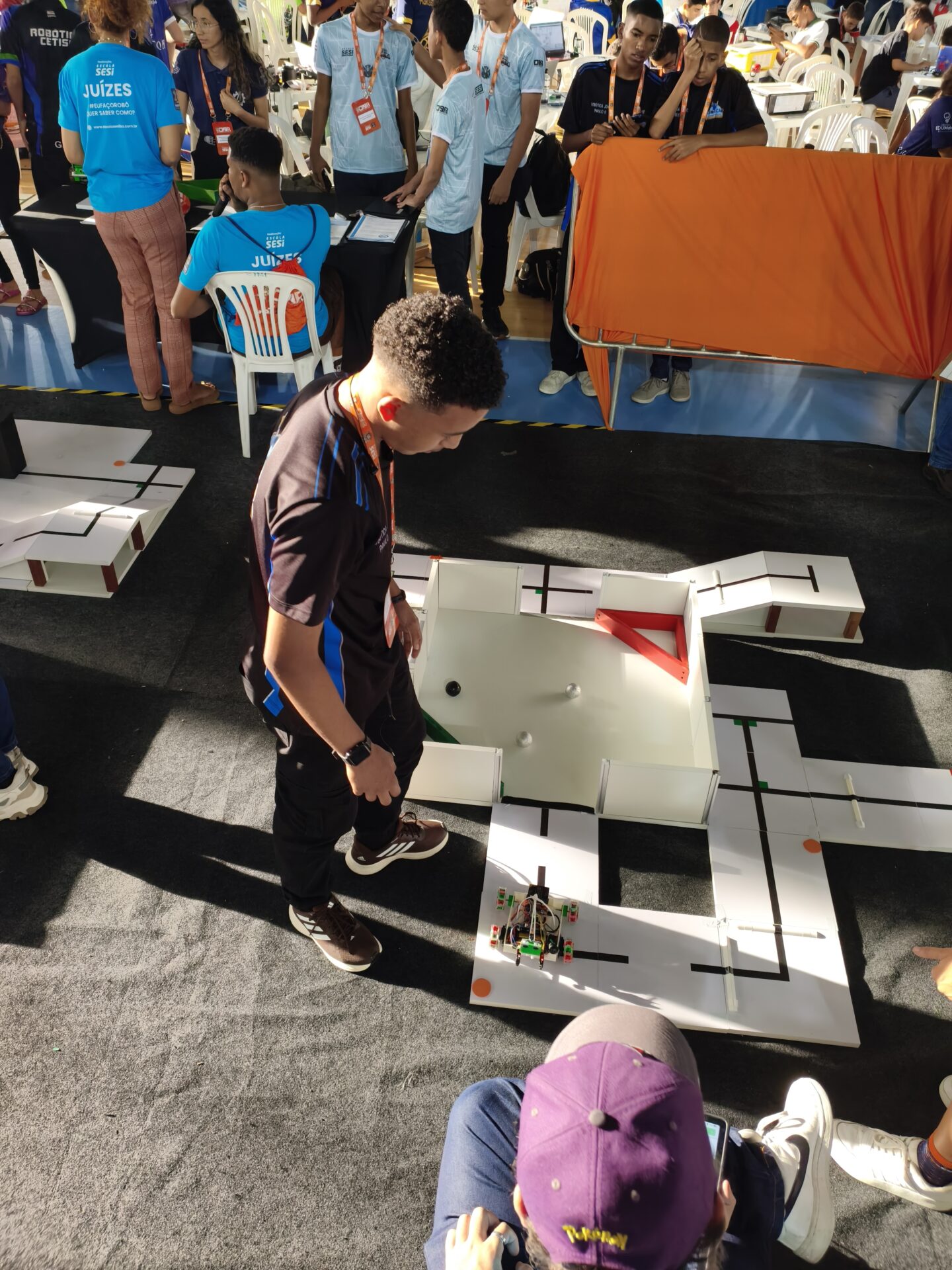
Challenges that turn into learning opportunities.
For Mirelle Rocha, a student who participated in the 2026 OBR, the experience was marked by new elements and challenges that contributed to her learning.
“This year, the OBR presented several challenges—such as new rules and even the arenas, where the lighting made it difficult to calibrate the sensors—but these challenges helped us in various ways, and I really enjoyed tackling them,” says Mirelle.
The experience also offered a chance to observe the students’ growth throughout their preparation. For Allan Borges, one of the most notable aspects was witnessing the students’ evolution and the autonomy they gained during the process. “My experience leading the OBR 2026 preparatory course was deeply rewarding, marked by the privilege of witnessing the students’ transformation as they evolved from mere observers into true technological innovators,” the instructor reports.
Allan highlights that, throughout the classes, the students gained technical mastery, progressing from designing their own parts in Tinkercad to independently creating modular code. Another key aspect was peer collaboration, with students taking the initiative to teach and support one another.
This sense of agency became even more evident during the competition. Faced with challenges, the students demonstrated independence and maturity, adjusting sensors in real-time and using creativity to adapt their programming to the needs of each situation.
“I felt immense pride seeing the students act with such independence and maturity under pressure—adjusting sensors in real-time and drawing on their creativity while programming during the competition challenges,” Allan states. For him, the students’ growth and active engagement represent the primary impact of the work accomplished.
Technology, autonomy, and new possibilities
Participation in OBR 2026 reinforces the importance of expanding young people’s access to experiences that carry education, technology, and innovation. By building, programming, testing, and solving problems, students develop skills that go beyond technical knowledge—such as critical thinking, creativity, collaboration, and autonomy.
For the João Paulo II Educational Center, the experience also offers an opportunity to broaden students’ horizons and demonstrate that technology can be an open field for discovery, learning, and forging new paths.
More than simply setting a robot in motion, participating in the Olympiad allowed these young people to put their knowledge into practice, tackle real-world challenges, and recognize their own capacity to create solutions.
It is an experience that demonstrates how learning is also about experimenting, sharing knowledge, and—as a team—discovering new possibilities for the future.